What is the difference?
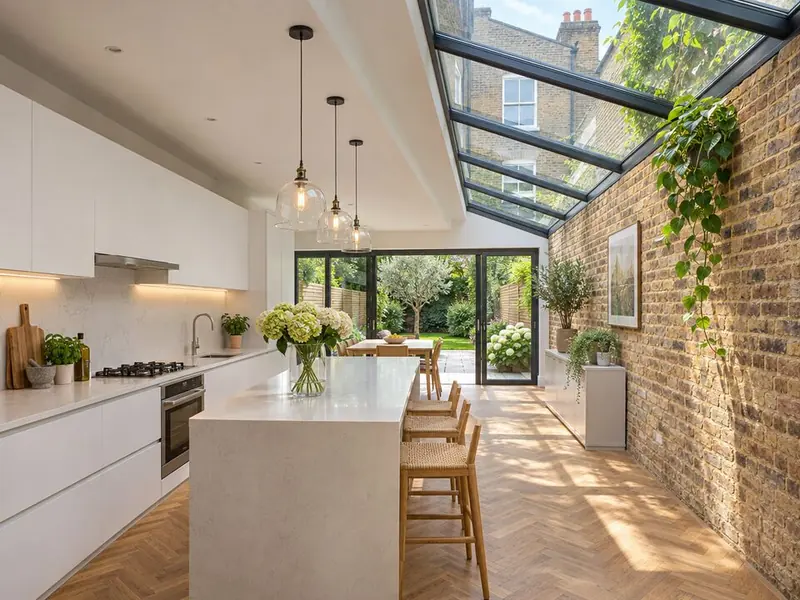
A side return fills the passage beside the back addition, widening the kitchen. A rear extension adds depth beyond the back wall. A wraparound does both, forming an L.
Space and light
A side return adds 8 to 18 square metres and keeps the garden almost untouched; a 3 metre rear extension on a terrace adds a similar area but takes lawn. Light is easier to manage with a side return because the glazed roof sits over the middle of the house.
Cost
Side returns cost more per square metre (£2,300–£3,800 in our guide) because of the steel frame, party walls and glazed roof; a plain single-storey rear extension is £1,900–£3,100.
Planning
Side return infills and the side leg of a wraparound are treated as side extensions in England: single-storey, no more than 4 metres high and no wider than half the original house. They are not permitted development in conservation areas, National Parks or National Landscapes, and a joined wraparound often needs a planning application because the side and rear rules apply together.
About this guide
Written by the Rear Extensions design team and checked against GOV.UK, Welsh and Scottish Government and Northern Ireland guidance in November 2026. It is general guidance, not legal advice; we confirm the rules for your house at the survey.