Which is better?
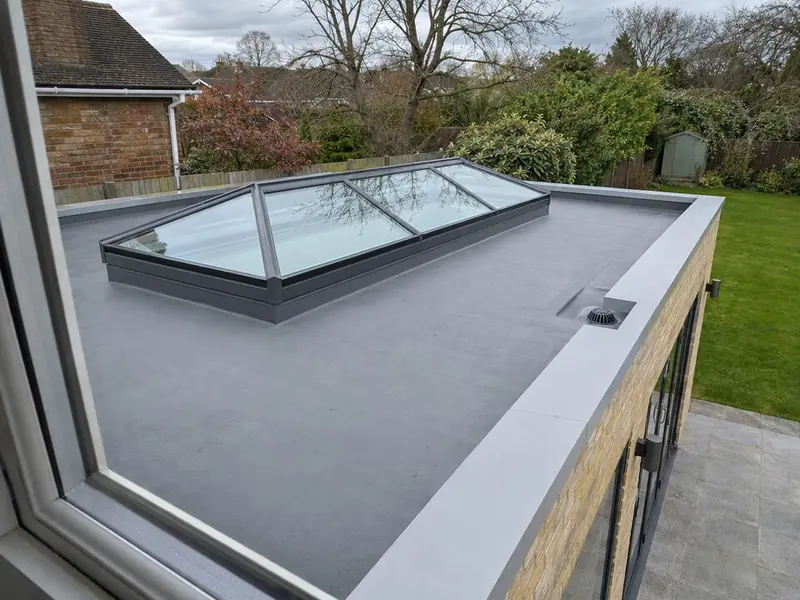
Neither in general. A warm flat roof suits most rear extensions because it stays below first-floor windows and takes a roof lantern; a pitched or lean-to roof gives a vaulted ceiling and a traditional outline where the windows above are high enough.
Appearance and light
Flat roofs give crisp, modern lines and pair naturally with lanterns and flat rooflights. Pitched roofs match period houses and bungalows and let you vault the ceiling, with roof windows in the slope.
Cost and lifespan
A pitched roof usually adds a few per cent to the build. A modern warm flat roof in single-ply or GRP typically lasts 25 years or more if the falls, outlets and upstands are built properly.
Planning limits
Height and eaves limits apply to both. In England the extension cannot exceed 4 metres in height under permitted development, and the eaves must stay under 3 metres if within 2 metres of a boundary, which often favours a flat roof on narrow plots.
About this guide
Written by the Rear Extensions design team and checked against GOV.UK, Welsh and Scottish Government and Northern Ireland guidance in November 2026. It is general guidance, not legal advice; we confirm the rules for your house at the survey.