Scotland
Rear extensions in the Highlands and Islands
Across the Highlands and Islands we handle the whole rear extension: survey, drawings, the planning route, building control and the build. Towns we cover here include Inverness, Elgin and Nairn.
Island and remote addresses in the Highlands and Islands are by arrangement: we confirm we can take the job, and agree any travel costs, before the first visit.
What are homes in the Highlands and Islands like to extend?
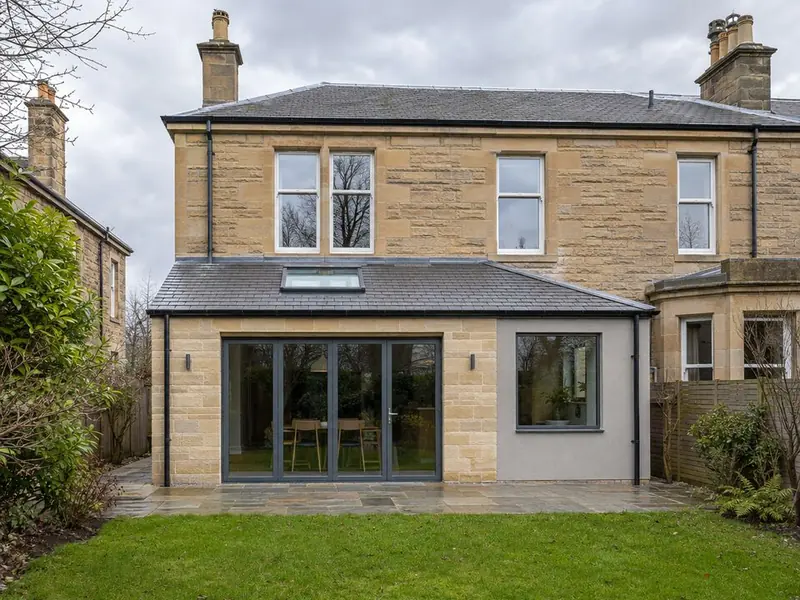
Traditional stone houses sit alongside modern bungalows and timber-frame homes around the Highlands and Islands. A lighter, contrasting addition at the back often suits older stone houses better than trying to copy the walling.
Rear extension prices in the Highlands and Islands
Prices in Scotland sit a little below our West Midlands baseline; building warrant fees and drawings are budgeted separately. Per square metre including VAT, standard specification:
| Extension | Per m² |
|---|---|
| Single-storey rear extension | £1,800–£2,940 |
| Two-storey (per m² across both floors) | £1,710–£2,560 |
| Side return | £2,180–£3,610 |
| Wraparound | £2,090–£3,420 |
| Glass-led | £2,660–£4,560 |
Planning and building rules in the Highlands and Islands
Scottish householder permitted development (Class 1A) covers many single-storey rear extensions, with a 3 metre eaves limit, a 4 metre height limit and, within 1 metre of a boundary, a depth limit of 3 metres for terraced houses or 4 metres for others. Conservation areas are excluded, and you need a building warrant whatever the planning position.
Scotland has no larger-extension prior approval route; extensions beyond permitted development need a planning application.
Scottish extensions are approved by building warrant, granted by the council's building standards team before work begins, with a completion certificate submitted when the work is finished.
There is no Party Wall Act in Scotland; neighbour matters are handled through the title deeds, common law and written agreement before work starts.
Classes 1A and 1B do not apply in conservation areas, and listed buildings need listed building consent.
Rear extensions we build in the Highlands and Islands
- Glazed and glass-box rear extensions
- Rear extensions for terraced houses
- Rear extensions for semi-detached houses
- Rear extensions for detached houses
- Rear extensions for bungalows
- Flat-roof rear extensions
- Pitched and lean-to roof rear extensions
- Knocking through to a rear extension
- Roof lanterns and rooflights for rear extensions
- Permitted development rear extensions
- Rear extension plans and planning applications
- Building Regulations for rear extensions
- Single-storey rear extensions
- Two-storey rear extensions
- Kitchen-diner rear extensions
- Side return extensions
- Wraparound extensions
Towns and districts in the Highlands and Islands
The main places we cover in the Highlands and Islands include Inverness, Elgin and Nairn, across postcode areas HS, IV and PH.
| Town | Postcode districts | Nearest town we also cover |
|---|---|---|
| Inverness | IV1, IV3 | Nairn (14.6 miles) |
| Elgin | IV30 | Nairn (21.3 miles) |
| Nairn | IV12 | Inverness (14.6 miles) |
| Fort William | PH33 | Inverness (56.6 miles) |
| Stornoway | HS1 | No other town on the island |
Areas near Highlands and Islands
FAQ
Questions people ask
How much does a rear extension cost in the Highlands and Islands?
As a guide, £1,800–£2,940 per square metre including VAT for a standard single-storey extension at Scotland rates.
Do I need planning permission in the Highlands and Islands?
Many single-storey rear extensions are permitted development under Class 1A, but not in conservation areas; you always need a building warrant before work starts.
Which towns in the Highlands and Islands do you cover?
5 towns and districts, including Inverness, Elgin and Nairn.
Do you handle building control?
Yes. We apply for the building warrant before work starts and submit the completion certificate at the end.